Introduction
Finding the motivation to work out is hard enough without having to navigate a crowded commercial gym or worry about someone using the equipment you need. If you live in an apartment or a small space, the idea of a home gym might seem like a distant dream reserved for those with basements or spare garages.
However, achieving a full-body transformation doesn’t require a room full of machines. The most effective and versatile setup is also the most compact: a pair of dumbbells and a bench. This classic combo allows you to perform hundreds of exercises, covering everything from building muscle to torching fat. Whether you are looking for a weight loss calculator to plan your deficit or a beginner dumbbell bench workout to start your journey, this guide will show you how to maximize this space-saving duo.
Why Dumbbells + Bench Are the Best Space-Saving Combo
When it comes to small space workout equipment, nothing beats the versatility of a bench and dumbbells. Unlike bulky machines or power racks that require a dedicated room, this setup can fit in a corner of your living room or bedroom.
Here is why this combination is the gold standard for home fitness:
- Versatility: You can perform full body exercises with dumbbells, from dumbbell bench press for chest to goblet squats for legs.
- Muscle Coverage: You can hit every major muscle group without needing multiple machines.
- Affordability: Compared to a full home gym setup, a quality bench and a set of adjustable dumbbells is a fraction of the cost.
- Progressive Overload: It is easy to incrementally increase weight, which is essential for building strength.
- Safety: If you fail on a dumbbell bench press, you can simply drop the weights to the side, unlike a barbell which can trap you.
Who Is This Dumbbell + Bench Setup Best For?
This compact workout setup is ideal for people who want maximum results without dedicating an entire room to fitness equipment. It works especially well for:
- Apartment dwellers: Limited space but still want a complete strength-training routine.
- Students: Affordable, portable, and easy to store between study sessions.
- Busy professionals: Quick setup and efficient full-body workouts without commuting to a gym.
- Beginners: Simple equipment with a low learning curve and reduced injury risk compared to complex machines.
- Minimalists: Those who prefer a clutter-free environment but still want effective training tools.
With just a bench and a pair of dumbbells, you can train every major muscle group while keeping your living space functional and organized.Equipment Needed: Building Your Compact Gym
Equipment Needed
To get started, you need to be smart about your purchases. The goal is to find gear that is durable but doesn’t permanently occupy your living space.
1. The Dumbbells
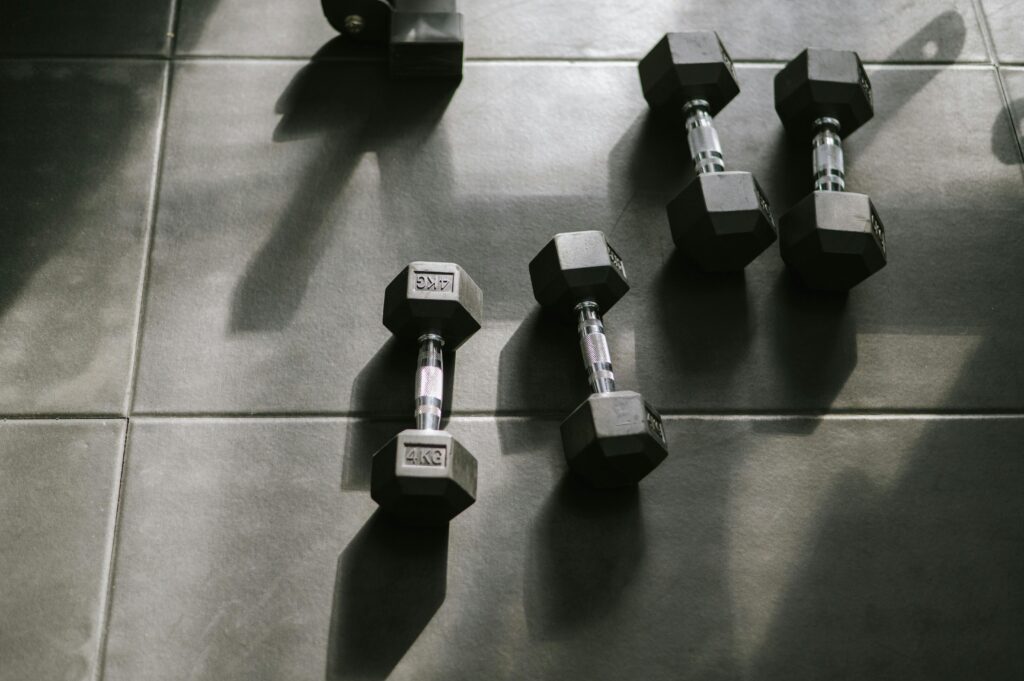
You have two choices: fixed dumbbells or adjustable dumbbells. For small spaces, adjustable dumbbells are the clear winner. They replace an entire rack of weights with a single handle. Look for a set that ranges from light (2-5 kg) for isolation work to heavy (20 kg+) for compound lifts.
2. The Bench
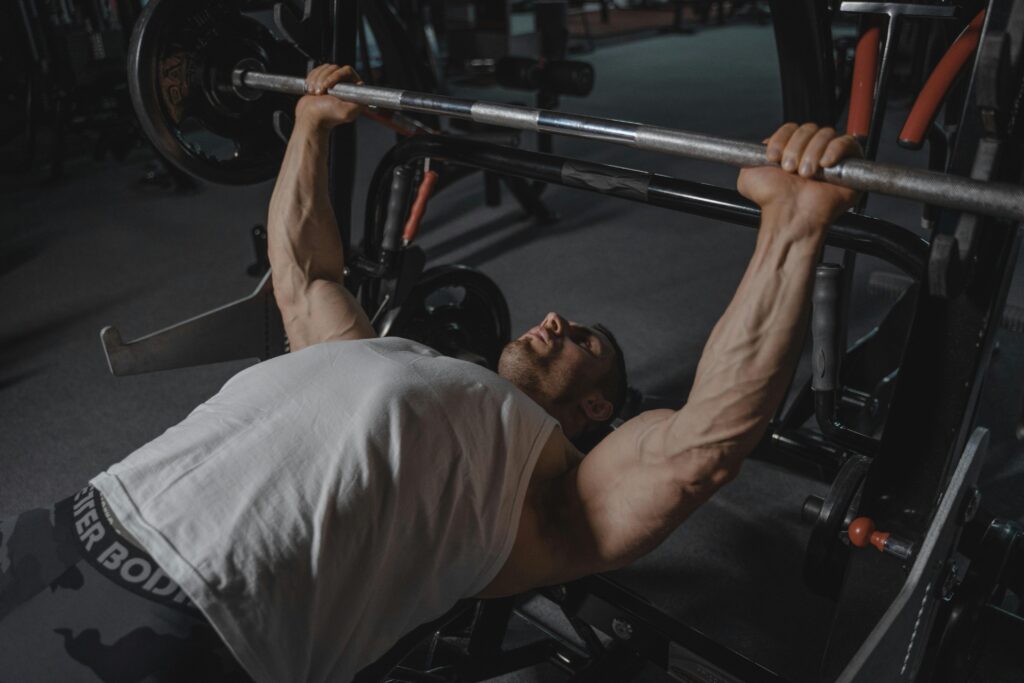
Do not skimp here. You need a stable surface. However, for space saving, look for an adjustable bench that can fold flat for storage. An adjustable bench allows you to do incline, decline, and flat presses, hitting your muscles from different angles.
3. Safety Tips
- Always check that the collars on your dumbbells are tight.
- Place your bench on a non-slip mat to protect your floors and stabilize your setup.
- When performing bench exercises with dumbbells, always kick the weights up with your legs rather than straining your back to get them into position.
For more detailed guidance on selecting the right equipment, resources from American Council on Exercise can help beginners make informed choices.
Beginner Dumbbell + Bench Workout Routine
If you are new to strength training, this routine is designed to build a foundation. It targets all major muscle groups using only your bench and dumbbells.
The Warm-up:
Perform 5 minutes of jumping jacks or high knees. Then, do one set of 10 reps with very light weights (or just the bar) for each exercise to lubricate the joints.
The Routine:
Perform this workout 3 times per week with at least one rest day in between.
| Exercise | Sets | Reps | Rest |
|---|---|---|---|
| Goblet Squats | 3 | 10-12 | 60s |
| Dumbbell Bench Press | 3 | 8-10 | 60s |
| Seated Dumbbell Shoulder Press | 3 | 8-10 | 60s |
| Bent-Over Dumbbell Rows | 3 | 10-12 | 60s |
| Bulgarian Split Squats | 3 | 8-10 (per leg) | 60s |
| Dumbbell Romanian Deadlifts | 3 | 12 | 60s |
Instructions:
- Goblet Squats: Hold one dumbbell vertically against your chest. Squat down keeping your chest up.
- Dumbbell Bench Press: Lie on the bench, drive your feet into the floor, and press the dumbbells up from your chest.
- Seated Shoulder Press: Sit on the bench with back support. Press the weights from shoulder height to overhead.
- Bent-Over Rows: Hinge at your hips, keeping your back flat. Row the dumbbells towards your hips.
- Bulgarian Split Squats: Place the top of your back foot on the bench. Lower into a lunge with your front leg.
- Dumbbell RDLs: With a slight bend in the knee, hinge at the hips to lower the dumbbells down your shins, feeling a stretch in the hamstrings.
If you prefer a guided session with real-time demonstrations, use the video below to see proper form and pacing for a full body dumbbell and bench workout:
Muscle-Specific Workouts
To keep your workouts varied, here are targeted exercises for specific body parts using your bench.
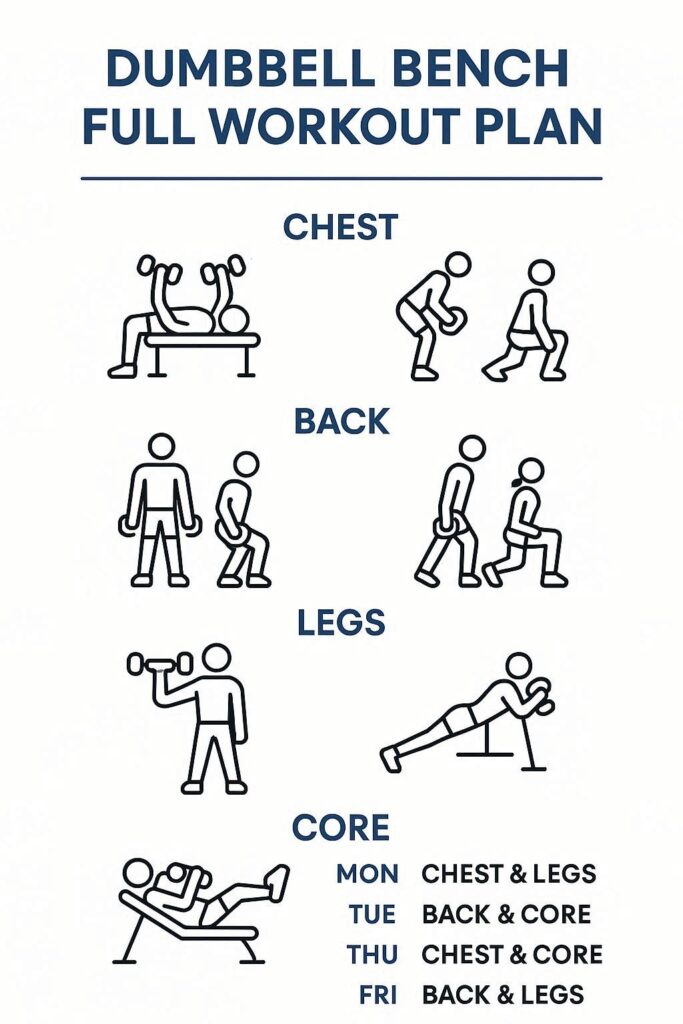
Chest Workouts
- Incline Dumbbell Press: Set the bench to a 30-45 degree angle to target the upper chest.
- Dumbbell Flyes: Lie on the flat bench with a slight bend in your elbows. Open your arms wide like a bird, then squeeze your chest to bring the weights back up.
Arms Workouts
- Incline Dumbbell Curls: Sit on the incline bench to perform bicep curls. The angle stretches the biceps at the bottom, increasing time under tension.
- Lying Tricep Extensions (Skull Crushers): Lie on the bench and extend the dumbbells over your chest. Lower them towards your head by bending at the elbows, then extend.
Legs Workouts
- Step-Ups: Use the bench as a platform. Step onto it with one foot, driving through the heel to lift your body up.
- Reverse Lunges: Holding dumbbells, step backward with one leg into a lunge. The bench can be used as a target to ensure you are stepping back far enough.
Core Workouts
- Bench Crunches: Sit on the edge of the bench with your feet anchored. Lean back slightly and crunch forward.
- Plank with Row: Get into a plank position with your hands on the dumbbells. Perform a row with one arm while balancing on the other.
Space Saving Tips for Small Apartments
Living in a small apartment doesn’t mean you have to sacrifice your fitness goals. Here is how to make the compact home gym gear work for you:
- Vertical Storage: When not in use, store your dumbbells on a small, vertical rack in a closet. If you have adjustable dumbbells, the stand often doubles as storage.
- The Vertical Bench: Many adjustable bench models are designed to stand upright vertically. This reduces their footprint from several square feet to just a few inches of wall space.
- Under the Bed: If your bench doesn’t fold, slide it partially under your bed. Dumbbells can be stored in a duffel bag and tucked away.
- Routine Scheduling: To avoid the hassle of setting up and tearing down every day, designate a specific “workout time.” Set up your gear the night before, use it in the morning, and break it down immediately. This keeps your living space functional for relaxation.
Comparison: Dumbbells vs Barbell for Home Gym
A common debate among home gym enthusiasts is whether to invest in a barbell setup or stick with dumbbells. For those with limited space, the answer is usually clear.
- Dumbbells:
- Pros: Correct muscle imbalances, greater range of motion, safer to lift alone, easier to store.
- Cons: Heavier weights can be cumbersome to pick up; loading adjustable dumbbells can take time.
- Barbell:
- Pros: Usually heavier weight capacity, better for powerlifting movements (deadlifts, squats).
- Cons: Requires a power rack for safety (heavy), larger footprint, higher risk of failing a lift without safety bars.
The Verdict: For 90% of home gym users, especially those in apartments, dumbbells are the superior choice. You can build just as much muscle with dumbbells as you can with a barbell, if not more, due to the increased stability requirements.
Download Free Printable Workout Plan
Prefer a printable version? Download the full routine here.
FAQs
1. Can I build muscle with only dumbbells and a bench?
Absolutely. Dumbbells allow for progressive overload, which is the key driver of muscle growth. By consistently increasing the weight or reps, you will build significant strength and size.
2. How much weight do beginners need?
If you are buying adjustable dumbbells, look for a set that goes up to at least 20-25 kg (45-55 lbs) per hand. This will cover you for most exercises for the first year of training. For specific isolation moves, you might still need lighter weights later on.
3. Is a bench necessary?
While you can do many exercises standing, a bench is essential for targeting muscles at different angles. Exercises like the dumbbell bench press and seated shoulder presses require the stability a bench provides to be effective and safe.
4. How much space is required for a home gym with a bench?
You need roughly a 6×6 foot area to exercise safely. However, for storage, if you buy space saving home gym setup items like folding benches and adjustable dumbbells, you can reduce the storage footprint to about 2×3 feet.
5. How often should I train?
For beginners, 3 full-body workouts per week is optimal. This allows for recovery while providing enough stimulus for growth. As you advance, you can switch to a 4-day upper/lower split.
6. Can I do cardio with this setup?
Yes! Create a circuit. Perform a dumbbell exercise (like thrusters) followed by a minute of high knees or mountain climbers. This is a highly effective way to burn calories without a treadmill.
7. Are dumbbells good for weight loss?
Yes. Strength training preserves muscle mass while you are in a calorie deficit. More muscle means a higher resting metabolism. If you are tracking your intake with a calorie deficit calculator, adding these workouts will accelerate your weight loss.
Conclusion
You don’t need a mansion to build the body you want. A simple setup consisting of a quality bench and a set of dumbbells is the most powerful, space-efficient tool at your disposal. It removes the barriers of travel and waiting for equipment, bringing the gym to you.
Start with the beginner routine provided, focus on mastering your form, and be consistent. Whether your goal is fat loss, muscle gain, or just feeling healthier, this dumbbell and bench workout combo is your ticket to success. For more ideas on setting up your perfect home environment, check out our complete Home Gym Setup Guide or explore more Full Body Home Workout options.