I get asked some version of this question constantly, usually by someone standing in front of a walking pad and a set of dumbbells wondering which one actually counts as their workout for the day. As a fifth year medical student who also spends my evenings testing compact home gym gear for small apartments, I have looked at this from both the physiology side and the real life, limited floor space side. Here is the honest breakdown.
Quick answer: Aerobic exercise uses oxygen to fuel movement over a sustained period, think walking, cycling, or using a walking pad at a steady pace. Anaerobic exercise relies on energy already stored in your muscles for short, intense bursts, think sprinting, heavy lifting, or HIIT. Your body needs both. The CDC recommends at least 150 minutes of moderate aerobic activity a week plus muscle strengthening work on 2 or more days.
What Is Aerobic Exercise?
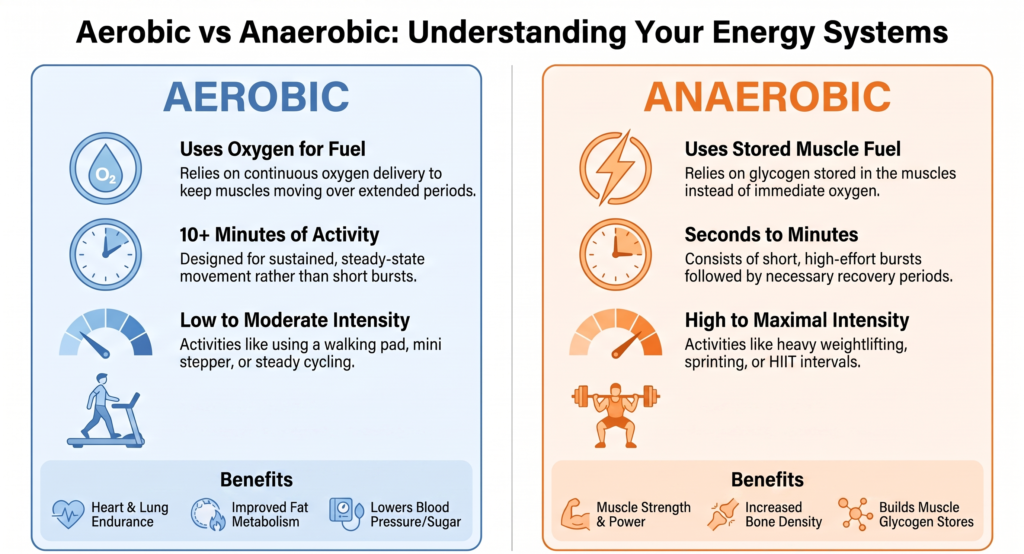
Aerobic exercise is any activity that uses oxygen as its main fuel source to keep your muscles moving for an extended period. The word itself means “with air.” When you are doing it, your heart rate and breathing go up and stay up in a steady, sustainable range.
This is what most people mean when they say cardio. Walking, jogging, swimming, and cycling all fall into this category, and so does time spent on a walking pad. In my own routine, this is the category I lean on most, because it fits around study blocks without wrecking my energy for the rest of the day. If you want to know exactly what pace keeps you in the ideal aerobic zone rather than guessing, I built a Zone 2 Walking Speed Calculator that does the math based on your age and resting heart rate.
What Is Anaerobic Exercise?
Anaerobic exercise is short, intense effort that your body fuels using energy already stored in your muscles, without relying on oxygen delivery in real time. The word means “without air.” This is why you cannot sustain it for long, your body runs through that stored fuel fast and you have to stop and recover.
Weightlifting, sprinting, and HIIT intervals are the classic examples. At home, this is where your power rack and barbell work live. If you are setting up a small space for this kind of training, I have a full breakdown of what to look for in a compact power rack and a standard Olympic barbell for apartment setups.
What Is the Real Difference Between Aerobic and Anaerobic Exercise?
The core difference comes down to fuel and duration. Aerobic exercise burns fuel using oxygen over a longer, steady period. Anaerobic exercise burns stored fuel in short, high effort bursts and needs recovery time afterward. Neither one is better, they train different systems and you get the most benefit from doing both.
| Aerobic Exercise | Anaerobic Exercise | |
|---|---|---|
| Energy source | Oxygen | Stored muscle fuel (glycogen) |
| Typical duration | 10 minutes or longer, continuous | Seconds to a couple of minutes, then rest |
| Intensity | Low to moderate, sustainable | High to maximal |
| Home examples | Walking pad, mini stepper, steady cycling | Power rack, barbell, sprint intervals |
| Main benefit | Heart and lung endurance, fat metabolism | Muscle strength, power, bone density |
A short physiology explainer helps this click for most readers. I found a solid one that walks through how your body switches between energy systems depending on intensity.
Which Home Cardio Machines Are Aerobic and Which Are Anaerobic?
This is the question most generic fitness articles skip, because they are not written by anyone who actually has to fit equipment into a bedroom corner. Here is how the common small space options split up.
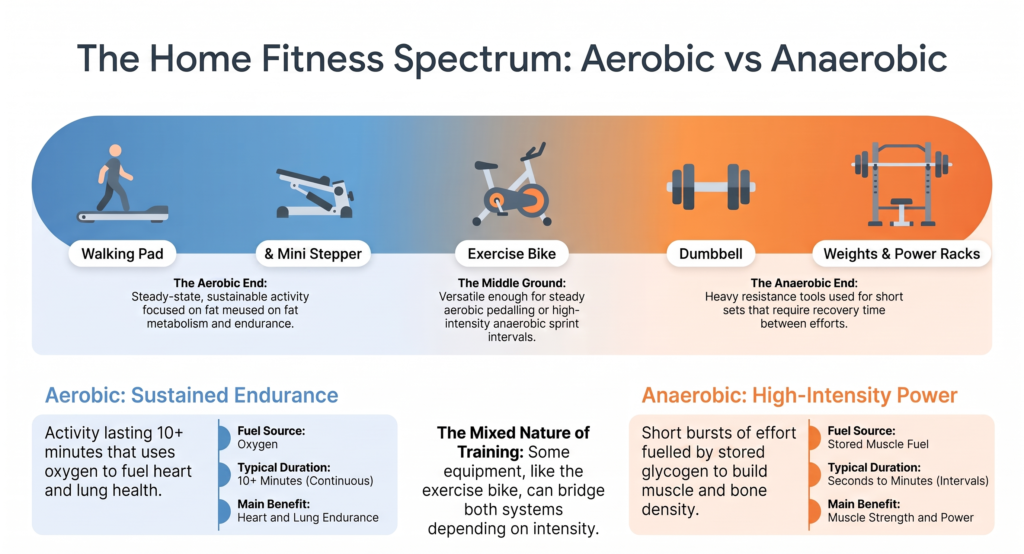
Walking pad. Almost always aerobic. You are moving at a steady pace for a sustained period, which is the exact definition of aerobic work. It is also the easiest machine to use while working, which is why I use mine during study sessions. If you are deciding between this and a treadmill, I compared both in detail in my walking pad vs treadmill guide.
Mini stepper. Mostly aerobic, but it sits closer to the anaerobic line than a walking pad because the intensity per minute is higher. I compared the two head to head, including calorie burn, in my mini stepper vs walking pad breakdown.
Exercise bike. This one genuinely depends on how you ride it. Steady, moderate pedaling is aerobic. Short, all out sprint intervals on high resistance push you into anaerobic territory. This dual nature is exactly why exercise bikes show up so often in search data, people are not sure which bucket they fall into, and the honest answer is both, depending on effort.
Power rack and barbell. Anaerobic. Compound lifts are short, high effort sets with rest between them, which is the textbook definition of anaerobic training. These are the pieces that round out a home setup so you are not doing aerobic work exclusively.
Are Exercise Bikes Good for Cardio?
Yes, exercise bikes are effective cardio equipment. Ridden at a steady, moderate pace, they train your aerobic system the same way walking or jogging does, and most models let you adjust resistance so the workout scales as your fitness improves.
What makes an exercise bike different from a walking pad is range. You can keep it fully aerobic with a steady moderate pace, or push into interval training and get a genuine anaerobic stimulus in the same session. That flexibility is a real advantage if floor space only allows for one cardio machine. The tradeoff is that a bike demands more focused attention than a walking pad, you generally cannot type an email while doing bike intervals the way you can while walking at 2 miles per hour.
What Exercise Burns the Most Calories at Home?
Among common home cardio machines, a stationary bike ridden at moderate to high intensity tends to burn the most calories per hour, generally in the 300 to 600 calorie range depending on your weight and effort. A walking pad burns less per hour, roughly 200 to 400 calories, but it wins on total daily volume because you can realistically use it for hours while working. A mini stepper sits at the higher intensity end for its size, often matching or exceeding a bike on a per minute basis because the vertical stepping motion recruits more muscle at once.
The honest takeaway from a lot of testing is that the machine that burns the most calories on paper is rarely the one that burns the most calories in your actual week. Consistency wins. If you want a clearer picture of how your specific numbers add up, my Japanese walking calorie and heart rate calculator will estimate your burn based on your own pace and body weight rather than a generic chart.
Will Exercise Lower Blood Pressure?
Yes. Regular aerobic exercise is one of the most well supported, drug free ways to lower blood pressure. A single session can lower systolic blood pressure for several hours afterward, and consistent training over weeks produces a lasting reduction. The American Heart Association recommends at least 150 minutes per week of moderate intensity aerobic activity, or 75 minutes per week of vigorous activity, to support healthy blood pressure.
I want to be direct here since this is health information, not just fitness content: if you have diagnosed hypertension or are on blood pressure medication, talk to your doctor before changing your exercise routine, especially before adding anaerobic or high intensity work. Exercise is a powerful tool, but it is not a replacement for medical supervision when a diagnosed condition is involved.
Will Exercise Lower Blood Sugar?
Yes, aerobic exercise in particular has a well documented, fairly immediate effect on blood sugar. Physical activity can lower blood glucose for up to 24 hours or more after a workout by making your body more sensitive to insulin. This is one of the clearest examples of exercise having a measurable, same day effect on a lab value, not just a long term benefit you have to take on faith.
This effect holds up specifically for aerobic sessions like walking pad use or steady cycling. If you manage diabetes or prediabetes, this is genuinely useful to build into a daily routine, but again, coordinate any new routine with your healthcare provider, particularly around insulin timing if that applies to you.
How Does Exercise Improve Mental Health?
Exercise, aerobic exercise especially, has a real and measurable effect on mood, not just a feel good cliche. A large 2023 analysis covering more than 1,000 trials and over 128,000 people found that exercise improved symptoms of depression, anxiety, and psychological distress more effectively than staying sedentary. Different types of movement help in different ways too, with resistance training showing particular benefit for depression symptoms and mind body practices like yoga standing out for anxiety.
For me personally, a walking pad session during a study break does more for my focus over the next hour than another cup of coffee would. That is anecdotal, but the research backs up why it works, movement genuinely shifts brain chemistry in ways that support mood and concentration.
Should I Do Aerobic or Anaerobic Exercise? How Do I Combine Them in a Small Space?
You need both, and a small space does not stop you from getting both in one week. Aerobic work builds your heart and lung capacity and supports metabolic health. Anaerobic work builds and preserves muscle and bone density, which matters more as you get older, not less. A well rounded week uses both.
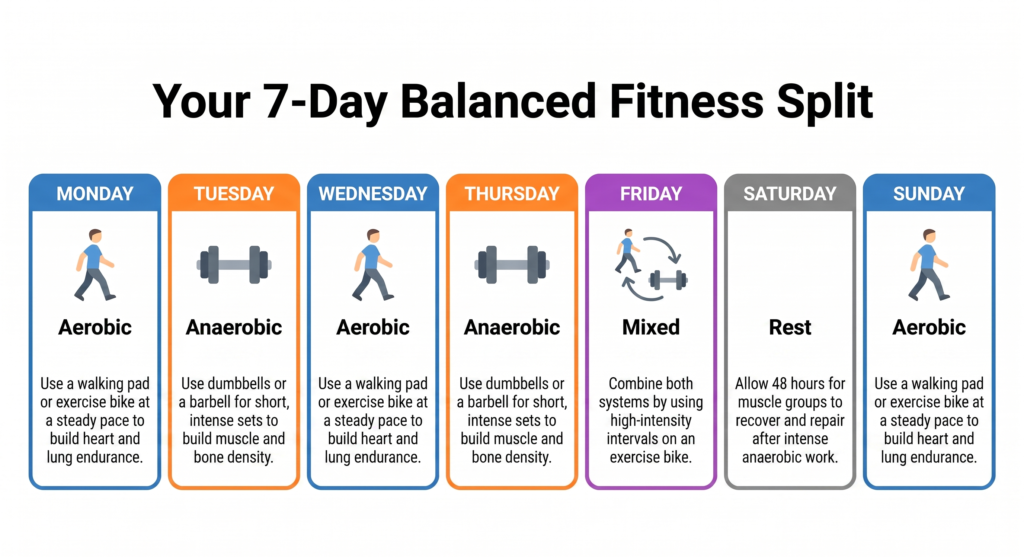
Here is a realistic split for a small apartment setup:
| Day | Session | Type |
|---|---|---|
| Monday | Walking pad, steady pace, 30 to 40 minutes | Aerobic |
| Tuesday | Power rack, compound lifts | Anaerobic |
| Wednesday | Walking pad or exercise bike, easy pace | Aerobic |
| Thursday | Barbell work, moderate load | Anaerobic |
| Friday | Exercise bike intervals | Mixed |
| Weekend | One rest day, one longer aerobic session | Aerobic |
If you are unsure what pace or heart rate zone keeps a session genuinely aerobic instead of accidentally sliding into anaerobic effort, run your numbers through my Zone 2 Walking Speed Calculator before you start. And if noise is a concern for your building, I put together an apartment gym noise checker that scores equipment before you buy, which matters more for anaerobic days than aerobic ones since dropped weights are the real noise culprit, not the walking pad.
Frequently Asked Questions
Is walking aerobic or anaerobic exercise?
Walking is aerobic exercise. It is a sustained, moderate intensity activity that relies on oxygen for fuel, which is the defining feature of aerobic work.
Is HIIT aerobic or anaerobic exercise?
HIIT is primarily anaerobic during the high intensity intervals, but the recovery periods between intervals lean aerobic. Most researchers classify HIIT as a mixed modality for this reason.
Is a mini stepper aerobic or anaerobic exercise?
A mini stepper is mostly aerobic, but it sits at a higher intensity than a walking pad, so shorter, harder sessions can push it closer to an anaerobic effort.
Can I do anaerobic exercise every day?
Not the same muscle groups. Anaerobic training like lifting causes muscle breakdown that needs 48 hours or more to recover from. Most routines alternate anaerobic days with aerobic or rest days for that reason.
How long before aerobic exercise lowers blood pressure?
A single aerobic session can lower blood pressure for several hours afterward. Consistent training over several weeks is what produces a lasting, measurable reduction.
Do I need special equipment for anaerobic exercise at home?
No, bodyweight moves like push ups and squats count as anaerobic work. A compact power rack and barbell simply let you keep progressing once bodyweight resistance stops being enough of a challenge.
About the author: I am a fifth year MBBS student and the person behind AnyRoomGym, where I test and write about home gym equipment that actually fits in small spaces. Exercise science content on this site is written from a combination of medical training and hands on equipment testing.