Your barbell is more than just a steel rod; it is the primary interface between your body and the weight. In a home gym or commercial setting, it is the one piece of equipment you touch on every single set. Despite its simple appearance, an Olympic barbell is a highly engineered piece of equipment. Choosing the wrong one or worse, a cheap, generic one can limit your progress, compromise your safety, and diminish your training experience.
This guide is designed to make you an informed buyer. We will dissect the anatomy of a barbell, explore the different types, and provide specific recommendations so you can confidently select the perfect bar for your goals in 2026.
1. Decoding the Barbell: The 5 Critical Specifications
Before you buy, you need to understand what you are paying for. Here are the five key specifications that define a barbell’s performance and durability.
Tensile Strength (PSI)
Tensile strength measures the amount of stress the steel can withstand before it permanently deforms or snaps. It is usually expressed in Pounds per Square Inch (PSI).
- How it matters: A higher PSI indicates a more durable bar that resists bending under heavy loads.
- The Scale:
- < 150k PSI: Avoid. These bars are prone to bending.
- 190k PSI – 200k PSI: The standard for most general-purpose and mid-range bars. Sufficient for most lifters.
- 205k+ PSI: The gold standard for hardcore powerlifting and heavy duty. Bars at this level are incredibly resistant to bending.
- 2026 Insight: While tensile strength is crucial, it is not the only factor. The steel’s yield strength and elasticity also matter, which is why reputable brands like Rogue and Eleiko are preferred over no-name brands with “high PSI” claims.
Knurling
The knurling is the textured pattern machined into the shaft to provide grip. It is a matter of personal preference, but the technical aspects are objective.
- Aggressiveness:
- Mountain Knurl (Aggressive): Features sharp, deep peaks. Ideal for powerlifting where a vice-like grip is needed for heavy squats and deadlifts. Can tear up hands during high-rep work.
- Moderate/Velvet Knurl: A smoother feel. Preferred for Olympic weightlifting to allow the bar to rotate smoothly in the hands during the snatch and clean, and for high rep CrossFit workouts.
- Knurl Marks: These are the smooth rings or lines on the shaft. They are not just for aesthetics. In competition, they mark the maximum legal grip width for the snatch (outer rings) and clean & jerk (inner rings).
Whip (or Flex)
Whip refers to the bar’s ability to bend and spring back under load.
- High Whip: Characteristic of weightlifting bars. When loaded, the bar bends, storing energy. This “whip” helps the lifter propel the bar overhead and quickly drop under it in a snatch.
- Low Whip (Stiff): Characteristic of powerlifting bars. Stiffness provides stability and a solid platform for pressing. A whippy bar for a bench press would feel unstable and inefficient.
Sleeve Spin
The sleeves are the rotating ends of the bar that hold the weight plates. The spin is determined by the bushings or bearings inside.
- Bushings: Bronze bushings are durable and provide a smooth, controlled spin. Found on most power bars and high-quality multipurpose bars.
- Bearings: Needle bearings allow for a much faster, more free-spinning rotation. Essential for Olympic weightlifting to reduce the torque on the lifter’s wrists during the turnover phase of a lift.
Finish
The finish protects the bar from rust and affects the feel.
- Bare Steel: The best feel and grip. However, it is highly susceptible to rust and requires constant maintenance (oiling) to protect it.
- Zinc Coating: A common, cost-effective finish that offers decent rust resistance. Can feel slicker than bare steel.
- Black Oxide: Looks great but offers minimal rust protection. Needs oiling similar to bare steel.
- Cerakote: A ceramic-based coating that is incredibly durable and rust-resistant. Maintains a good feel but can slightly smooth out the knurling.
- Stainless Steel: The premium choice. It offers the feel of bare steel with virtually zero maintenance for rust resistance. It is, however, the most expensive option.
2. The Three Main Types of Olympic Barbells
Not all 7-foot bars are created equal. They are purpose-built tools for specific disciplines.
| Bar Type | Primary Use | Key Features | Best For | Example Specs |
|---|---|---|---|---|
| Powerlifting Bar | Squat, Bench Press, Deadlift | Stiff (low whip), Aggressive Knurling, 29mm Diameter, Slow Spin (bushings), High Tensile Strength (205k+ PSI). | Powerlifters, Strongman, Lifters focused on maximum strength and stability. | Rogue Ohio Power Bar, Texas Power Bar |
| Weightlifting Bar | Snatch, Clean & Jerk | Whipy (high flex), Moderate Knurling, 28mm Diameter (women’s 25mm), Fast Spin (needle bearings). | Olympic Weightlifters, athletes training for explosive speed and technique. | Eleiko IWF Competition Bar, Rogue WL Bar |
| Multipurpose / CrossFit Bar | Varied functional fitness | Moderate Whip, Medium-Aggressive Knurling, 28.5mm Diameter, Good Spin (usually high-quality bushings or hybrid). | CrossFit, garage gyms with varied programming, general strength and conditioning. | Rogue Ohio Bar, REP Fitness Gladiator |
3. Top Barbell Brands & Recommendations for 2026
The market is crowded, but these brands consistently deliver on quality, value, and performance.
The All-Rounder: Rogue Ohio Bar
- Description: The Rogue Ohio Bar is arguably the most popular barbell in the world. It strikes a perfect balance between stiffness and whip. The Cerakote finish is durable, and the knurling is aggressive enough for heavy pulls but not so sharp that it shreds your hands in a WOD.
- Best For: The lifter who wants one bar to do it all in a garage gym. [ Best Garage Gym Setup Guide]
The Powerlifter’s Choice: Rogue Ohio Power Bar & Texas Power Bar
- Rogue Ohio Power Bar: Features a 29mm stiff shaft, aggressive knurling (often compared to a cheese grater), and a clear center knurl for squat stability. Available in various finishes, including Stainless Steel.
- Texas Power Bar: An iconic American-made bar. Known for its slightly softer, “signature” knurling (still aggressive) and exceptional toughness. A favorite among raw powerlifters.
- Best For: Lifters whose primary goal is maximizing strength in the squat, bench, and deadlift.
The Weightlifter’s Choice: Eleiko IWF Weightlifting Bar & Rogue WL Bar
- Eleiko IWF Weightlifting Bar: The undisputed gold standard of Olympic weightlifting. It features a perfect combination of whip and spin, with a passive, comfortable knurling. It is a precision tool for a specific sport and comes with a matching price tag.
- Rogue WL Bar: A fantastic high-performance alternative to Eleiko. It offers excellent whip and fast-bearing spin for heavy Olympic lifts without the absolute top-tier cost.
- Best For: Competitive Olympic lifters and serious enthusiasts who demand the best equipment for the snatch and clean & jerk.
The Value King: REP Fitness & Fringe Sport
- REP Fitness Gladiator Bar: An outstanding value bar. It features a Cerakote shaft, bronze bushings, and a moderate knurl. It’s a great do-it-all bar for the budget-conscious lifter.
- Fringe Sport Wonder Bar: A hybrid bar designed to handle both power and Olympic lifting. Comes with a “Boneyard Warranty” that covers even cosmetic defects, showing their confidence in the product. They offer bare steel, black zinc, and stainless steel options.
- Best For: Lifters building a gym on a budget who refuse to compromise on core quality and specifications. Honorable Mention: American Barbell
4. What to Look For in 2026: Updated Buying Considerations
The barbell market has evolved. Here’s what to keep in mind this year.
- The Rise of “Value Engineering”: In 2026, inflation is a concern. Be wary of “too good to be true” prices. Cheap bars cut costs on steel quality and sleeve assembly. Look for established brands (Rogue, REP, Fringe, American Barbell) that offer “mid-tier” lines (like Rogue’s Boneyard or REP’s open-box deals) to get premium specs at a lower price.
- Supply Chain & Stock: While better than previous years, some specialty bars (like Stainless Steel versions) can still go in and out of stock. If you see your ideal bar available, it may be wise to purchase it.
- Hybrids are the Norm: The lines between bar types are blurring. The multipurpose category has grown because most home gym owners need one bar that can do a bit of everything. Bars like the Rogue Ohio Bar are better than ever at this.
- Sleeve Design: Look for bars with a “snap ring” or “bolt-on” sleeve design. These are easier to repair or replace if you ever damage a sleeve, rather than having to scrap the entire bar.
- Barbell Pairing: A high-quality barbell performs best when paired with a stable rack that allows safe lifting without a spotter. Our detailed guide to the best power rack for home gym setups explains which racks offer the strongest frames and safest spotter systems.
5. Maintenance 101: Protect Your Investment
A high-quality barbell is a generational purchase if you care for it.
- Cleaning: Use a nylon brush to regularly clean chalk and debris from the knurling. Never use a wire brush, as it will damage the finish.
- Lubrication: The sleeves need lubrication to maintain spin. Every few months, apply a light machine oil (like 3-in-1) or a silicone-based lubricant to the point where the sleeve meets the shaft. Rotate the sleeves to work it in.
- Storage: Always store your bar horizontally on a rack or vertically in a holder. Leaning it in a corner invites bending and accidents. Keep it in a climate-controlled environment if possible to prevent rust.
Enhance Your Learning: Multimedia & External Resources
To truly understand the feel of a barbell, reading is not enough. We recommend supplementing this guide with visual resources.
- YouTube Reviews: Search for channels like Garage Gym Reviews, Basement Brandon, or Coop’s Reviews for hands-on video comparisons of the bars mentioned above. Watching someone check the knurl sharpness or spin a sleeve is invaluable.
- Recommended Video Review
- 📹 Best Olympic Barbell Deep Dive 2024! — Rogue, REP, Eleiko & More
- Watch here: https://www.youtube.com/watch?v=GCx2sVRXZjw
- This video visually explains the differences between bar types, knurling, sleeve spin, whip, and offers hands‑on comparisons of the top barbells mentioned in this guide
- Infographics:
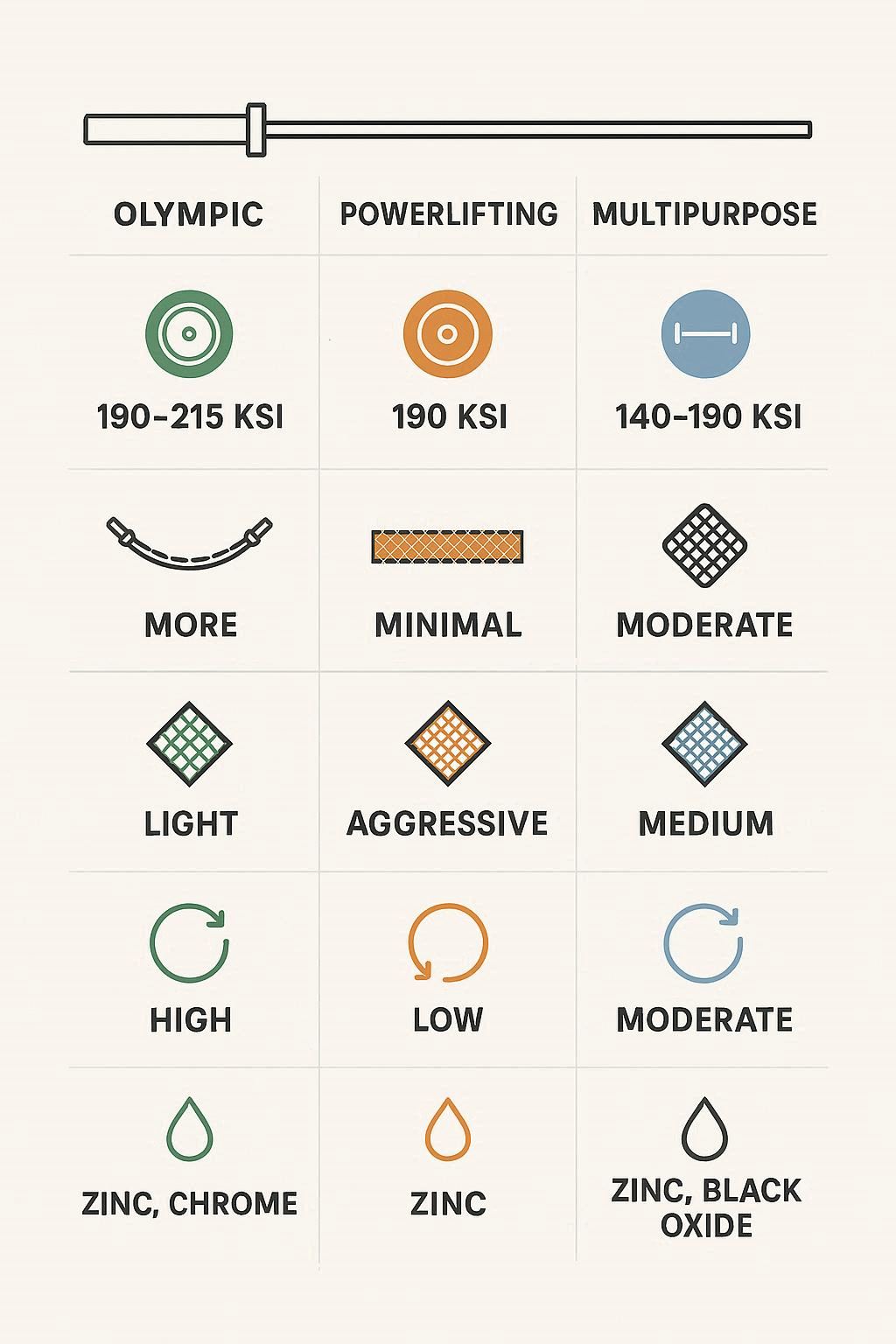
- This visual guide breaks down the critical specifications that define each bar type. Notice how the tensile strength (KSI) correlates directly with the bar’s intended use—highest for powerlifting, lower for multipurpose versatility. The chart also visually compares the knurling aggressiveness (from Light/Medium on Olympic bars to Aggressive on Power Bars) and the whip (from High flex in Weightlifting to Low in Powerlifting). Refer to this diagram to see how the shaft, sleeve, knurling marks, and end cap come together, with finish options like Zinc, Chrome, and Black Oxide noted for their respective durability.
- For the most current pricing and stock, check directly with the manufacturers:
Conclusion: The Centerpiece of Your Strength Journey
Selecting the right Olympic barbell is a critical decision that directly impacts your performance, safety, and enjoyment in the gym. By understanding the difference between tensile strength ratings, knurling patterns, and spin mechanisms, you move beyond being a passive consumer to an informed lifter.
This guide is intended to serve as the definitive resource on the topic a comprehensive replacement for outdated or broken links across the web. Whether you are a powerlifter needing a stiff, aggressive bar, a weightlifter chasing a new PR in the snatch, or a garage gym athlete building your dream setup, the perfect bar for your goals in 2026 is out there. Invest wisely in this tool, maintain it well, and it will serve you for a lifetime.
Frequently Asked Questions: Your Olympic Barbell Queries Answered
1. What is the difference between a bearing and a bushing barbell?
Answer: The difference lies in the mechanism inside the sleeve.
- Bushings: These are simple, durable cylinders (often bronze) that allow for a smooth, controlled spin. They are low-maintenance and ideal for powerlifting and general training where you don’t need the sleeves to spin for several seconds.
- Bearings: These are small, needle-like cylinders that reduce friction significantly, allowing the sleeves to spin very fast and freely. This “fast spin” is critical for Olympic weightlifting to prevent the bar from twisting your wrists during the catch phase of a snatch or clean.
2. What barbell diameter is best for small hands?
Answer: For lifters with smaller hands, a 28mm barbell (the standard men’s Olympic weightlifting diameter) is generally the most comfortable. It is easier to grip and allows for a more secure hook grip. Avoid 29mm “Power Bars,” as the thicker shaft can be difficult to close your hands around, potentially limiting grip strength and deadlift performance.
3. Is a center knurl necessary? Will it hurt during squats?
Answer: It depends on your primary lift.
- Necessary For: Powerlifting and heavy back squats. The center knurl grips your shirt or back, preventing the bar from sliding down your spine during heavy squats.
- Potentially Uncomfortable For: Lifters who do high-rep front squats or clean the bar frequently. A sharp center knurl can dig into the throat or clavicle. Many weightlifting and multipurpose bars feature a “center knurl” that is much milder or omitted entirely for comfort.
4. Can I use a Powerlifting bar for Olympic lifts?
Answer: Technically yes, but it is not recommended. A powerlifting bar is too stiff (lacks whip) and has a slow spin. This makes it difficult to generate the energy needed to “whip” the bar overhead in a snatch and puts more torque on your wrists during the turnover. You will likely find the aggressive knurling tears up your hands during the high-velocity movements of weightlifting.
5. How much weight does it take to bend a barbell?
Answer: It depends entirely on the bar’s tensile strength and the type of steel. A cheap bar with low tensile strength (under 150k PSI) might bend with a dropped 300 lb deadlift. A high-quality bar (190k+ PSI) is designed to handle 1,000+ lbs without permanent deformation. However, dropping a heavy bar unevenly or with the plates locked only on one end can bend even the strongest bar. The load isn’t the only factor; how it is loaded matters.
6. What is the best budget barbell for a home gym?
Answer: The best budget barbells offer high specifications at a lower price point by cutting costs on brand prestige or packaging, not on steel quality. Top recommendations include:
- REP Fitness Gladiator Bar: Excellent Cerakote finish and performance for under $300.
- Fringe Sport Wonder Bar: A true hybrid with multiple finish options and a fantastic warranty.
- Rogue Boneyard Bar: These are “second quality” or blemished bars from Rogue. They offer the same performance as a brand-new Ohio or OPB for a significant discount, with cosmetic imperfections being the only trade-off.
7. How often should I oil my barbell sleeves?
Answer: As a general rule, you should lubricate the sleeves every 3 to 6 months. If you notice the spin becoming “gritty,” slow, or hear squeaking, it’s time for maintenance. Use a lightweight machine oil (like 3-in-1) or a silicone spray. Apply it to the seam where the sleeve meets the shaft and rotate the sleeves vigorously to work it in.
8. What is the difference between men’s and women’s Olympic bars?
Answer: There are three key differences:
- Diameter: Men’s bars are 28mm, while women’s competition bars are 25mm, making them easier for smaller hands to grip.
- Length/Weight: Women’s bars are slightly shorter (about 6.5 feet vs. 7.2 feet) and lighter (15 kg / 33 lbs vs. 20 kg / 44 lbs).
- Knurling: Women’s bars often have no center knurl.
Note: Many “multipurpose” or “technique” bars now come in 15kg and 10kg versions, which are excellent for younger athletes or lifters with smaller hands.
9. What barbell is used in the Olympics?
Answer: In the Olympic Games, the official barbell is provided by the games’ sponsor. For several recent games, Eleiko has been the official provider. In the 2020 Tokyo Olympics, Uesaka was the official bar. These are premium, IWF-certified weightlifting bars with specific tolerances for whip, spin, and knurling.
10. What is a “hybrid” barbell?
Answer: A hybrid barbell is designed to bridge the gap between Powerlifting and Weightlifting bars. It typically features a 28.5mm shaft (splitting the difference), moderate whip, and medium-aggressive knurling. The goal is to provide a bar that is stiff enough for heavy squats and deadlifts but has enough whip and spin for Olympic lifts and CrossFit. The Rogue Ohio Bar is the classic example of a successful hybrid.
11. What is the most common mistake beginners make when buying a barbell?
Answer: The most common mistake is buying a cheap, generic “all-purpose” bar from a big-box store or an unbranded online seller. These bars often have low tensile strength (prone to bending), terrible bushings that seize up, and inconsistent knurling. Beginners end up buying a bar that limits their progress and then having to replace it within a year. It is always better to save up for a quality bar from a reputable fitness brand.
12. Will a stainless steel barbell rust?
Answer: While highly corrosion-resistant, stainless steel is not 100% “rust-proof.” It is significantly more resistant than bare steel or black oxide and requires no oiling to prevent rust. However, if left in a consistently wet or humid environment, it can eventually develop surface oxidation (sometimes called “tea staining”). For 99% of home gym owners, stainless steel offers the perfect balance of a bare-steel feel and zero-maintenance durability.